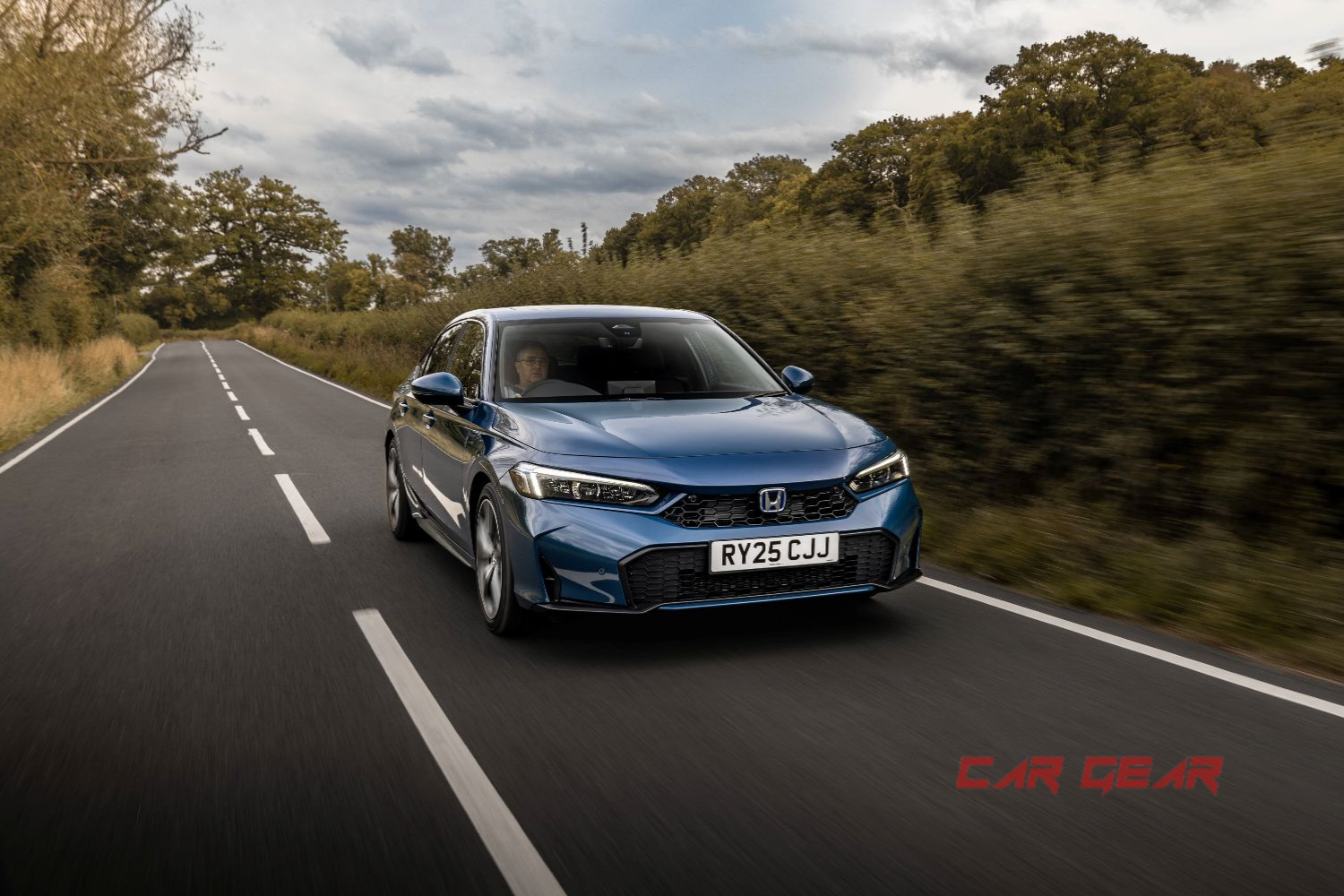
Introducing the Honda Civic e:HEV 26MY
In and amongst all the SUVs, EVs and tidal wave of unheralded Chinese machines emerging in the automotive market at today, and all permutations of the heretofore-mentioned, it’s often tough to remember that there are still some very conventional vehicles out there if you want them. And they don’t come more traditional or understandable than a nameplate which has been about for more than 50 years and 11 generations of hatchback model. So is the upgraded Honda Civic e:HEV good enough to make you renounce your yearning for some kind of incredibly affordable Chinese electric SUV with an odd brand title and a random alphanumeric model designator?
Test Vehicle Details
Model: 2026 Honda Civic e:HEV Advance
Price: Civic range from £34,325, Advance from £37,880, vehicle as tested £39,295 OTR
Engine: 1.9-litre Atkinson-cycle four-cylinder petrol plus Intelligent Multi-Mode Drive (i-MMD) hybrid system featuring twin electric motors (one generator, one propulsion)
Transmission: electronically regulated continuously variable automatic, front-wheel drive
Power: fuel 143hp at 6,000rpm, electric motor 184hp, stated system max 184hp
Torque: petrol 186Nm at 4,500rpm, electric motor 315Nm, stated system max 315Nm
Emissions: 114g/km
Economy: 56.5mpg 0-62mph: 8.1 seconds
Top speed: 112mph
Boot space: 409-1,187 liters
Maximum towing weight: 750kg (braked trailer)
Kerb weight: 1,503kg
Styling
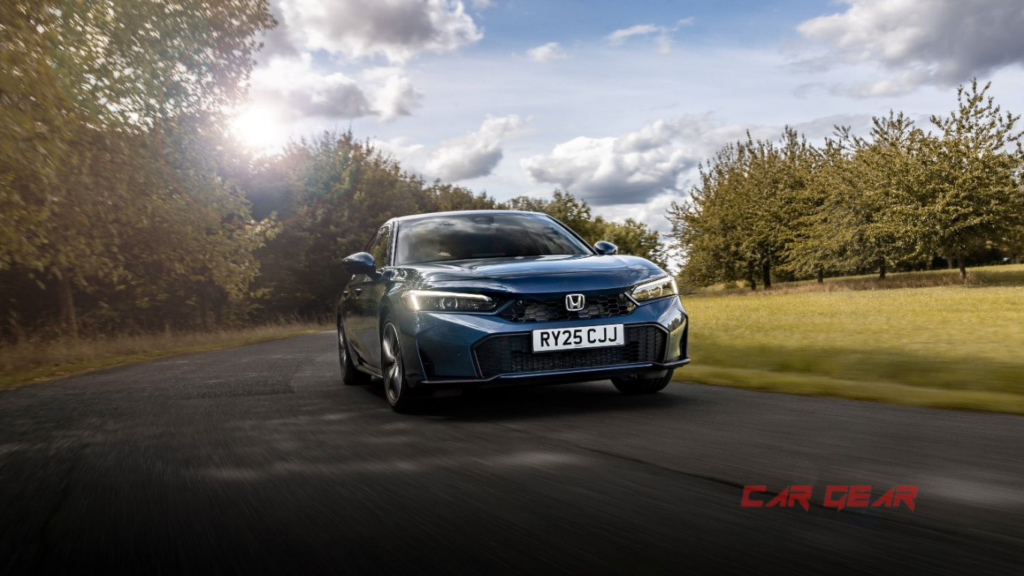
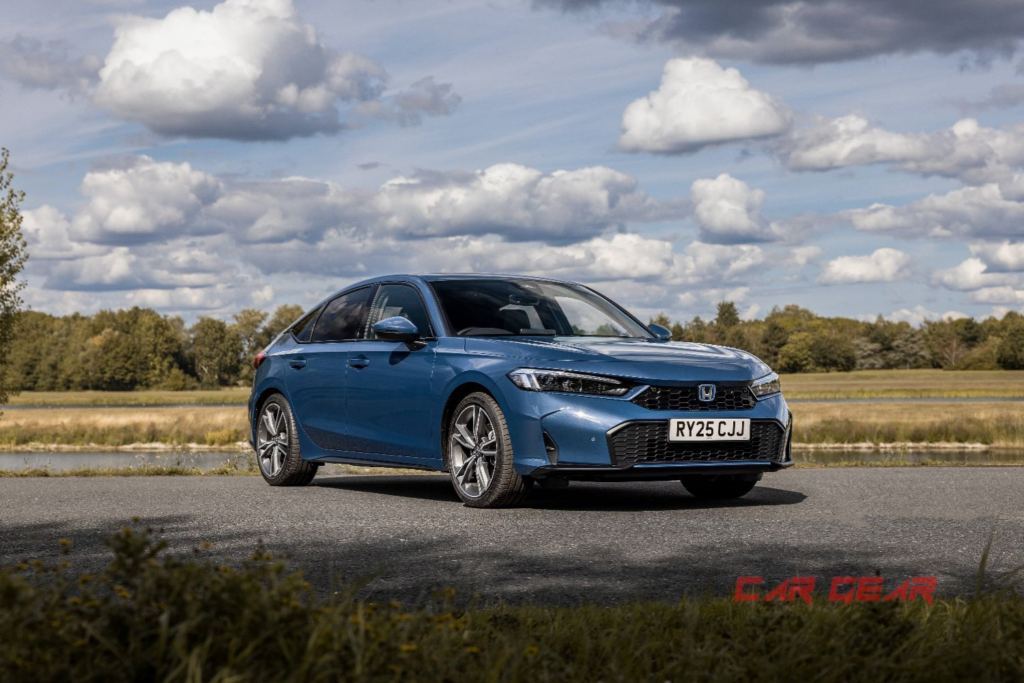
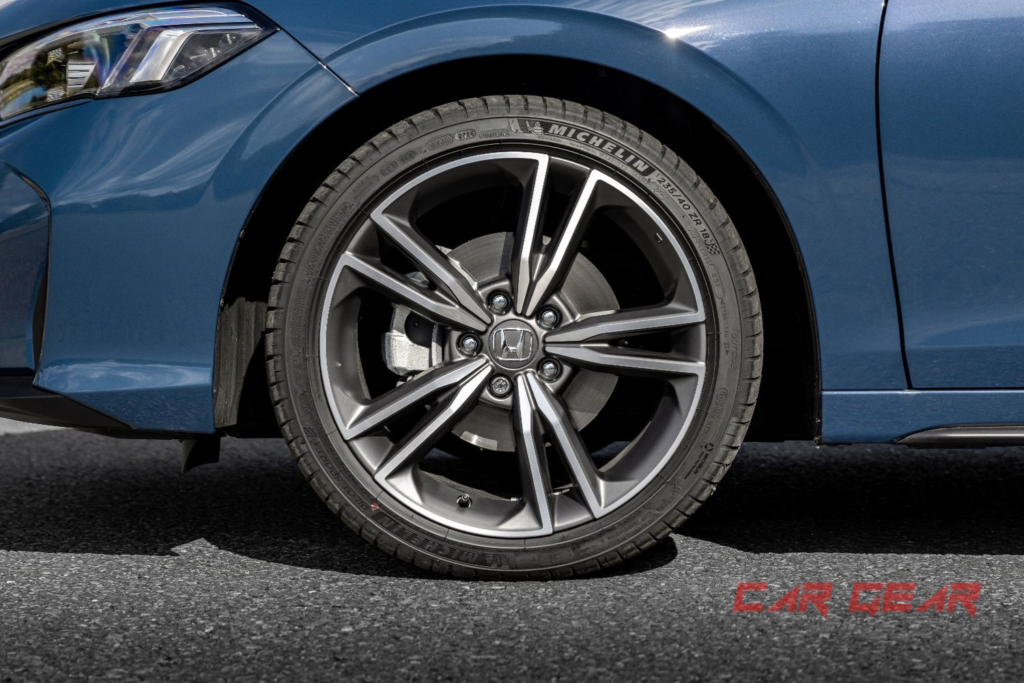
Before you can see the differences between the front end of this most recent iteration and a picture of a pre-facelift Mk11, you will need to take a close look at both, so let us provide you some tips. The primary loss from the Honda’s nose—all 26MY-on vehicles have had their front foglights removed—is the reason the bumper is cleaner and has a more upright outer-vent detail. The radiator grille between the headlights is broader than it was previously, and the lower air intake in the chin is more clearly defined. In addition to a new body color dubbed Seabed Blue and 18-inch, two-tone, diamond-cut alloys in grey for Advance-spec cars like our tester (the wheels on Sport Civics are black), the garnishes for the grille and headlights are intended to give the vehicle a sharper, sportier appearance. Indeed, that is the one shown in the pictures.
Whether or not you thought the Mk10 Civic was a dog’s supper from an aesthetic standpoint will likely determine whether or not you believe Honda made a wise decision in being so cautious with the stylistic changes to the Mk11. The current model’s exterior may seem a little boring to you if you enjoyed the bold style of the previous model. Even with this nearly identical airbrushing, you’ll still think the most recent Honda hatch is a sleek, smooth vehicle if you thought the previous generation Civic was ridiculous and a contradictory riot of lines. For what it’s worth, we actually enjoyed the Mk10, but we believe the redesigned Mk11’s fastback-like shape still makes it sufficiently attractive.
Interior
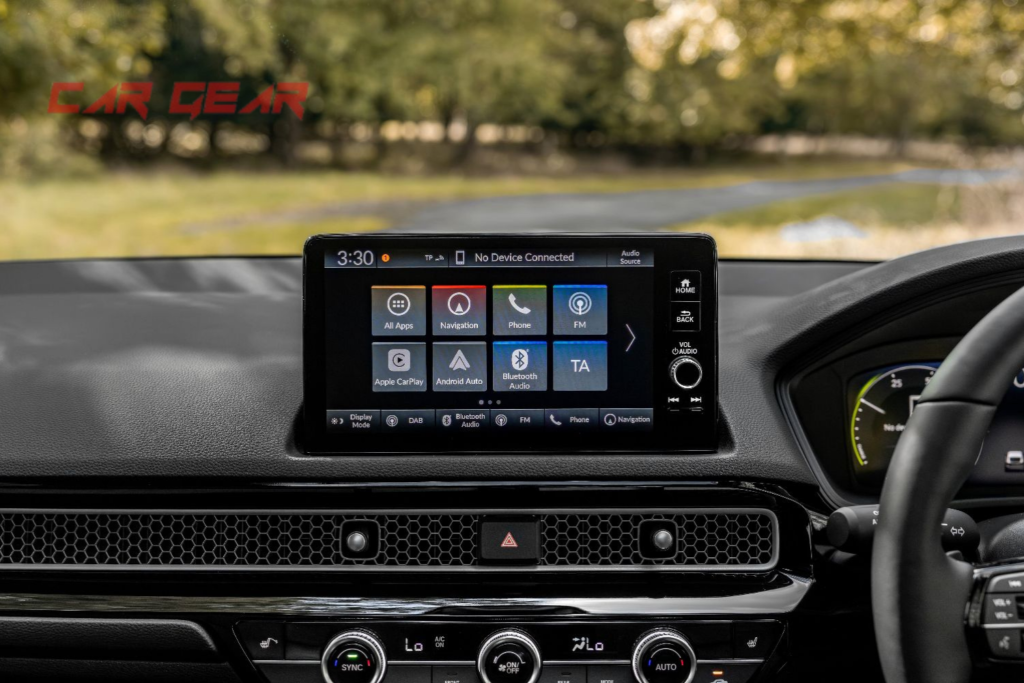
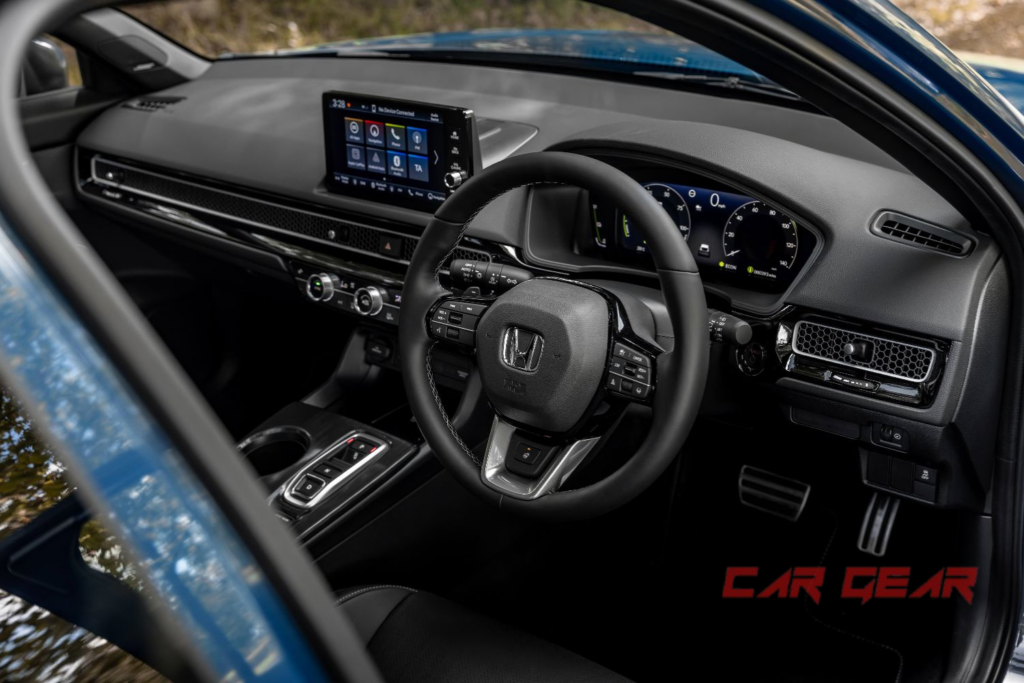
All 2026MY-on Honda Civics now have black pillars and rooflining, which the manufacturer says gives the cabin a more upscale impression. The updated automobiles include matte-chrome detailing around the air vents, and improved cabin lighting, including footwell lights, is another detail enhancement. The primary upgrade is the 10.2-inch Digital Driver Display in the instrument cluster, which is available on more models in the range. A new heated steering wheel and wireless smartphone charging are also included starting with the Sport grade. However, our Advance, which has always had this configuration as the flagship spec, is mostly unaffected by it.
On the one hand, the inside of the 2026 Civic deserves recognition. Because it has features like physical climate controls, steering wheel buttons, and easy-to-use air vents, it’s a well-built vehicle with genuinely excellent ergonomics. However, the fascia’s design is somewhat stiff, and the cluster’s and the central nine-inch Honda Connect infotainment system’s visuals are undeniably outdated. The Honda’s interface doesn’t feel particularly modern because the main control display is especially difficult to use and has outdated reaction speeds, and the ADAS features are inconveniently divided between it and the cluster.
Realisticness
Despite the sloping roofline and rear hatch, the Honda Civic Mk11 facelift has a good amount of passenger room in the back as well as storage and stowage options throughout the cabin. What’s missing is a huge boot. The Honda’s 409-liter storage box is adequate and larger than the aging Volkswagen Golf Mk8, but the 600-liter capacity of a Skoda Octavia hatch would make the Civic look foolish. Additionally, the Japanese car still has that peculiar retractable baggage cover that pulls out laterally, from left to right, but it’s a flimsy old thing, both in terms of functionality and appearance.
Performance
The Civic Mk11’s single e:HEV i-MMD powertrain, a non-plug-in hybrid with two electric motors, remains unchanged. The same Atkinson-cycle four-cylinder gasoline engine continues to provide the vehicle with peak outputs of 184 horsepower and 315 Nm, but this does not make the vehicle all-wheel drive because one of these motors serves as the generator and the other is used for propulsion. The entire automobile weighs only 1.5 tonnes at the kerb, therefore the 0-62 mph sprint is reported to take just 8.1 seconds.
Although Honda refers to the combustion engine as a 2.0-liter, it is actually a 1.9 as its swept capacity is 1,933cc. Don’t worry, the Honda’s drivetrain is really nice. The Civic seems appropriately zippy since it has such a wide spread of electrically assisted torque that it reacts sharply to throttle inputs. If you choose to crank it up, the engine isn’t especially loud or strained. Thank you also to the e-CVT, which is one of the most sophisticated and realistic-feeling ‘boxes of this type we’ve ever tried. It simulates gearchanges as the car accelerates, so there are no awkward moments when the four-pot engine revves right out in the wake of large throttle openings.
During our week-long test of the e:HEV, the Civic proved appropriately fuel-efficient without requiring us to drive it in any blatantly fuel-saving manner. After almost 700 miles of testing on a variety of roads and speeds, it averaged 50.6 mpg overall, reaching a peak of 57.2 mpg on a lengthy trip up the A1 to Northumberland from the East Midlands. Thus, the hybrid equipment demonstrates its value in a range of real-world situations.
However, there is one small complaint about the e:HEV’s regenerative braking. The paddle shifts can be used to change it, but unless we’re doing something incorrectly, the moment you put the throttle back on after adjusting it for a bigger regen impact, it returned to a lower position. Therefore, if you wish to use this feature on the Honda, you have to keep clicking at the paddles as you get closer to intersections and other similar locations, just to have the car return to its preferred position a few seconds later.
Ride & Handling
We must admit that driving a vehicle that is somewhat light, low, and has a great, hunkered-down center of gravity can be enjoyable these days. We’re here to tell you that there is undoubtedly some joy to be had while driving a Civic since Honda is one of those businesses that knows how to build up a chassis, even when you’re talking about a daily vehicle and not something that’s really performance-oriented.
However, we won’t go so far as to claim that it’s incredibly captivating. The Honda’s rear axle is not the most active in the world, so its expertise on a difficult back road is keeping itself clean and tidy rather than the car dancing around the turns with lots of handling sparkle. However, the steering is positive and accurate, with even some feel to play with. Instead of corking, it’s praiseworthy in the corners.
However, the Civic e:HEV is superior since it is appropriately sophisticated and cozy. As we’ve already mentioned, the drivetrain is dignified and quiet, and the car maintains a respectable level of wind, road, and suspension noise at higher speeds. The 18s can occasionally crash through and over surface flaws in the road, but these incidents are rare, so overall, the Honda is a fairly laid-back vehicle.
Value
The Honda Civic’s current issue is that it appears somewhat expensive for “just” a hybrid hatchback. An Elegance costs £32,960, a Sport costs £34,530, while the Advance reviewed here costs £37,880. However, those prices do not include fees and taxes, so the total cost on the road is £39,295.
To be fair, the Advance has every luxury possible, including a panoramic roof, a 12-speaker Bose premium audio system, adaptive cruise, heated front seats and steering wheel, and real leather upholstery, among many other features. However, even by today’s insane new car prices, nearly $40,000 for a standard car does seem excessive.
Verdict
It was quite refreshing to spend a week in a Honda Civic e:HEV. It’s ‘simply’ a simple car with well-executed handling, a powerful yet efficient drivetrain, and a roomy, well-built cabin. The problem is that, in terms of C-segment hatchbacks, it appears that the midlife update for the Honda hasn’t really changed much or moved it further up the segment when compared to its conventional rivals; we can’t just be persuaded by the fact that the Civic isn’t an SUV, electric, or yet another new Chinese machine. The Japanese company’s reluctance to make more significant modifications to the Mk11 Civic seems like a lost opportunity at over £40,000 for a cabin that doesn’t feel very exceptional in terms of its technology and a driving experience that, although capable, isn’t particularly stellar.