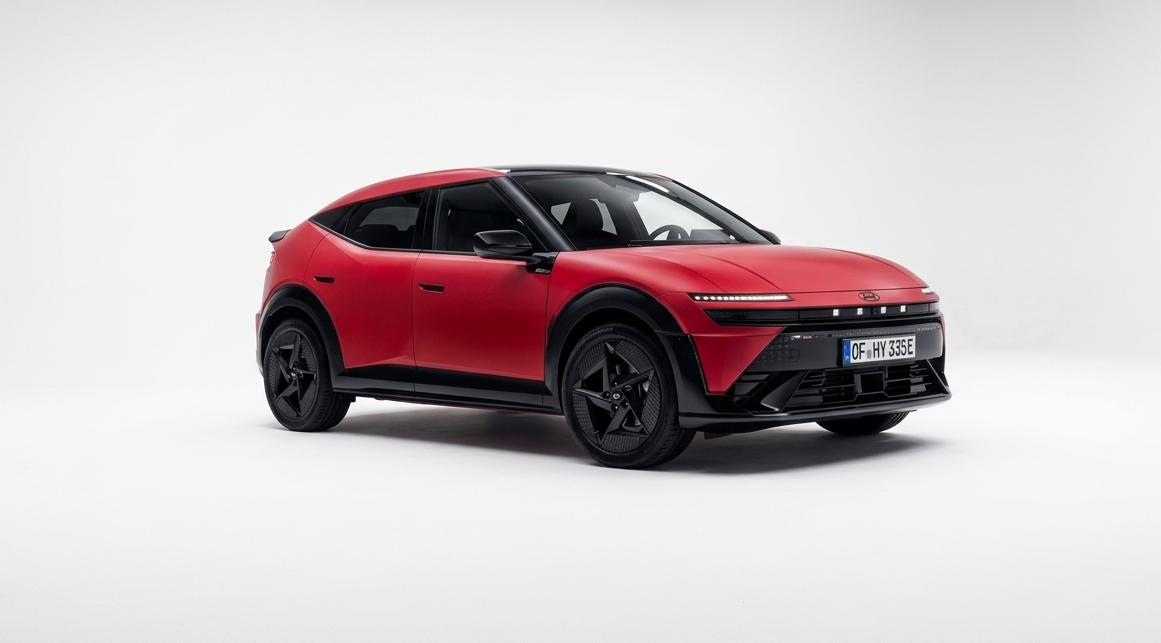
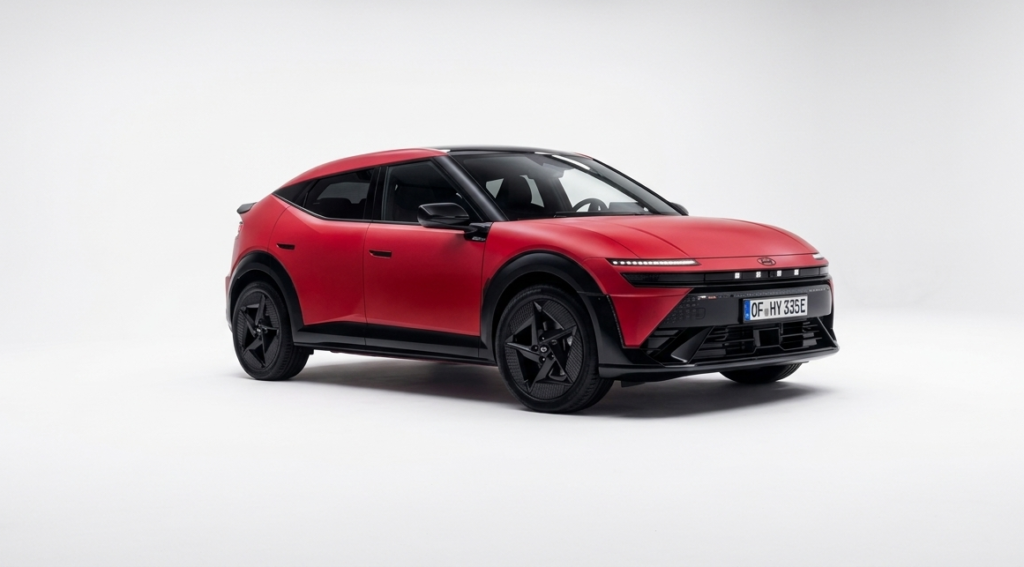
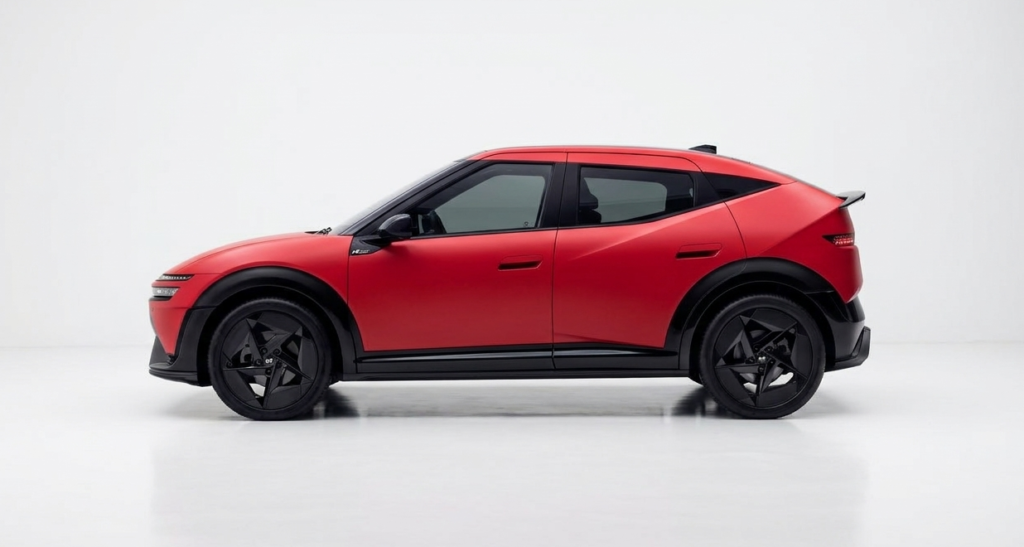
Hyundai is expanding its family of electric cars with a new, smaller model. The business presented the Ioniq 3, a vehicle that works as a “baby brother” to the successful Ioniq 5. Hyundai labels the new model a “aero hatchback.” It looks a bit like a tiny SUV but sits lower to the ground, and while it might look futuristic, it shares its bones with several EVs from Kia, especially the EV3 and EV4.
The Hyundai Ioniq 3 is not a very huge car, but it uses its space smartly. It measures 4,155 mm long – nearly the same length as a Hyundai Bayon. However, the distance between the front and back wheels is 2,680 mm. This lengthy wheelbase is the same as the much taller Kia EV3. By shifting the wheels to the corners, Hyundai generated extra room for those sitting inside.
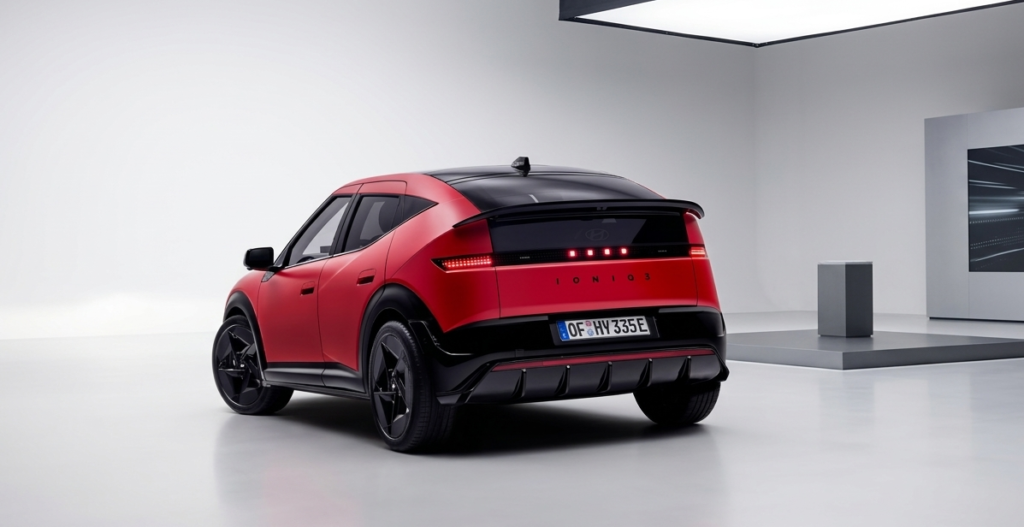
While making the real version more useful, designers retained some of the entertaining concepts from the concept car. This is a typical five-door hatchback that is simple to use on a daily basis; you won’t discover any odd doors. Split LED lights are located on the front. The Morse code letter “H” is spelled out by the light pattern on the rear if you look closely. The back window is one design element that may cause some controversy. The glass is divided in half by a thick horizontal bar, which may make it more difficult to see what’s behind you.
Hyundai aims to offer multiple models, including a sporty-looking N Line. The base model comes with 16-inch wheels, but the N Line receives substantially bigger 19-inch alloy wheels. The N Line also includes aggressive bumpers and a rear spoiler. Most of these elements are painted in black to match the roof and the plastic trim around the wheel arches.
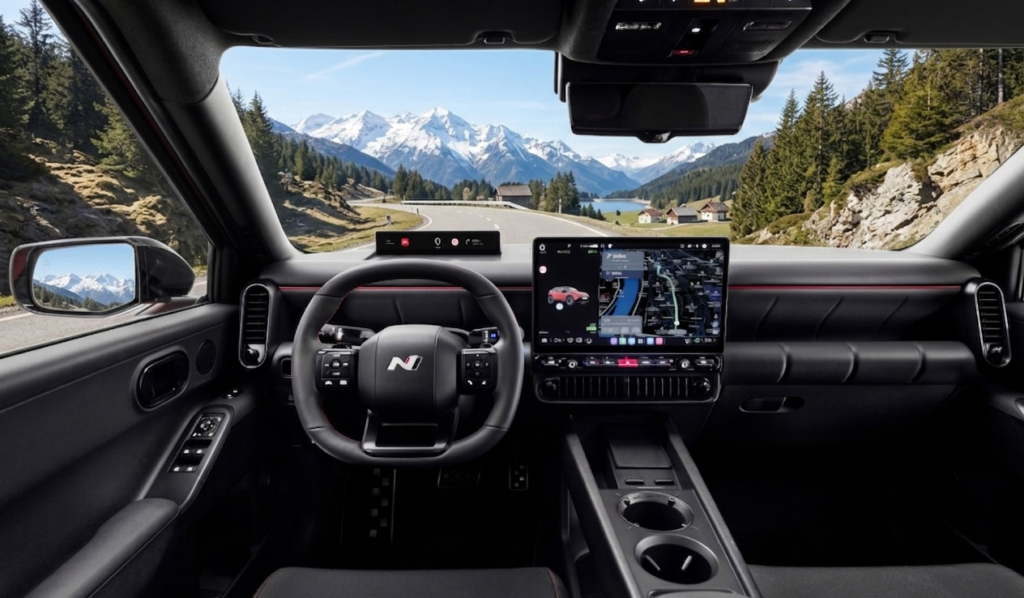
Inside the cabin, the Ioniq 3 feels quite modern. Most drivers will glance at a big 14.6-inch touchscreen in the middle of the dashboard. If you buy a lesser version, you get a 12.9-inch screen instead. Both systems employ Google-based software named Pleos. This is the first time Hyundai has installed this specific feature in a production automobile. Unlike some other electric cars that hide everything under a screen, this one still has real controls for the air conditioning and radio.
Practicality is a significant selling point for the new Ioniq 3. The gear shifter is situated on a stalk behind the steering wheel, leaving the center region clear for cup holders, storage bins, and a cordless phone charging. The trunk can accommodate 44l of stuff. There is also a concealed storage place under the floor called a “Megabox” for extra things. If you need to take a nap while the car charges, the “Relaxation Seats” can lean back to keep you comfy.
When it comes to power, the Hyundai Ioniq 3 provides two possibilities. The Standard Range variant features a 144 hp (108 kW) motor and a 42.2 kWh battery. This arrangement allows the automobile to drive 344 km on a single charge. If you need to go further, the Long Range model is the superior pick. It has a larger 61 kWh battery that delivers 496 km (308 miles) of range. Interestingly, the Long Range motor has slightly less power at 133 hp (100 kW), but both variants produce 250 Nm (184 lb-ft) of torque.
A high-performance “N” variant is reportedly in the horizon. A fast version of the Ioniq 3 appears quite possible, given that the car’s architecture can accommodate two motors and up to 288 horsepower. As of right now, Europe will see the release of the standard versions later this year. The vehicles will be manufactured in Turkey. Regretfully, drivers in North America will not be able to purchase this model in the US. Imported cars would be too costly for American consumers to contemplate due to high taxes.