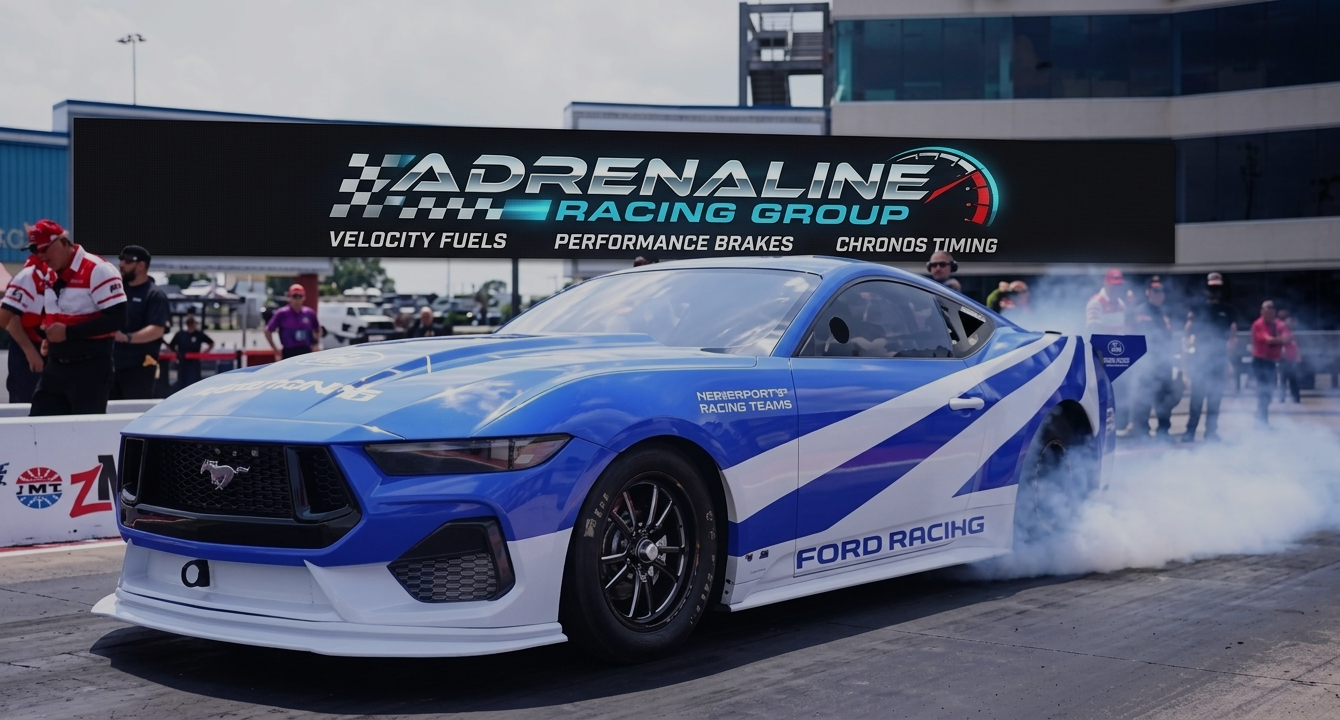
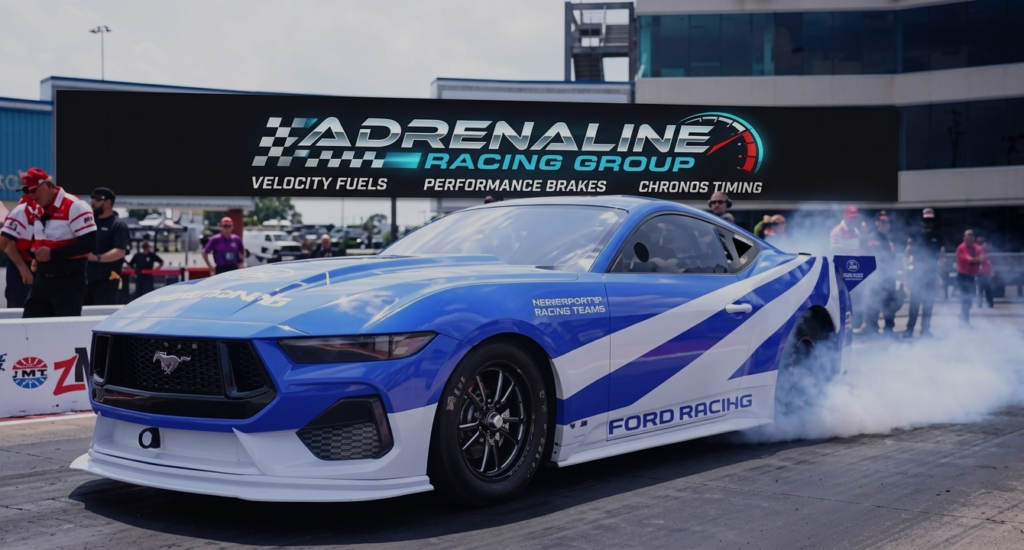
Drag racing usually entails overwhelming smell of gasoline and the loud boom of engines. But during the NHRA 4-Wide Nationals in Charlotte, a different kind of machine stole the show. Ford Racing brought their latest creation, the Mustang Cobra Jet 2200, to the track, and the results were nothing short of historic. This updated version is currently the quickest of all electric cars on a drag strip ever – it finished a quarter-mile run in 6.87 seconds, and it reached a high speed of 356 km/h.
This performance indeed win the competition, and it destroyed Ford’s own previous record. In September 2024, the older Cobra Jet 1800 achieved a record of 7.623 seconds. Cutting three-quarters of a second off a race time might not sound like much to a person walking down the street, but in professional racing, it is a tremendous leap. Most racers fight for weeks simply to gain a few thousandths of a second.
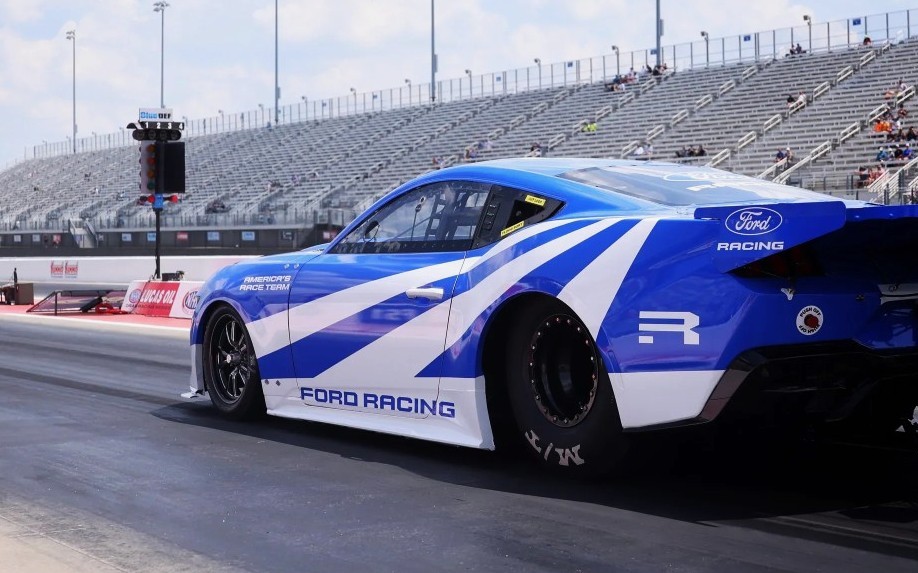
The secret to this speed is a thorough overhaul of how the car uses power. Some might think Ford just put more batteries and stronger motors to the previous car, but that is not the case. The Cobra Jet 2200 was created from the ground up to be more efficient. It delivers a staggering 2,200 horsepower – around 1,640.5 kilowatts. This power comes from two custom-built electric motors. Interestingly, Ford elected to use only two motors and two inverters this time, instead of the four used in the previous generation. By reducing the setup, the crew made the car lighter and more effective.
The motors of this new electric monster are indeed a marvel of engineering. They weigh nearly half as much as the motors in the earlier version, yet they create 600 more horsepower. This means the car has greater “muscle” yet carries less “fat.” The inverters that govern the flow of electricity are likewise very efficient, squandering less than 2% of the energy they process. All of this runs on a 900V electrical circuit.

One of the weirdest parts of this high-tech car is a piece of technology from the past. Ford engineers installed a unique centrifugal clutch. Usually, EVs do not utilize clutches, but drag racing is a particular instance. When the light turns green, the automobile needs to throw all its power onto the tarmac without spinning the tires and losing control. This clutch slides for just a millisecond at the start to help the automobile launch perfectly. Once the automobile is underway, the clutch locks up so the power goes directly to the wheels for the optimum efficiency.
The car also uses a transmission with many gears. Most electric cars only have one gear because electric motors perform well at many speeds. The specialized motors in the new Mustang function their best when they are spinning incredibly rapidly. By using varied gears, the automobile stays in its “happy zone” throughout the whole race. Ford argues that having these gears makes the car more than a second faster than it would be with just one gear.
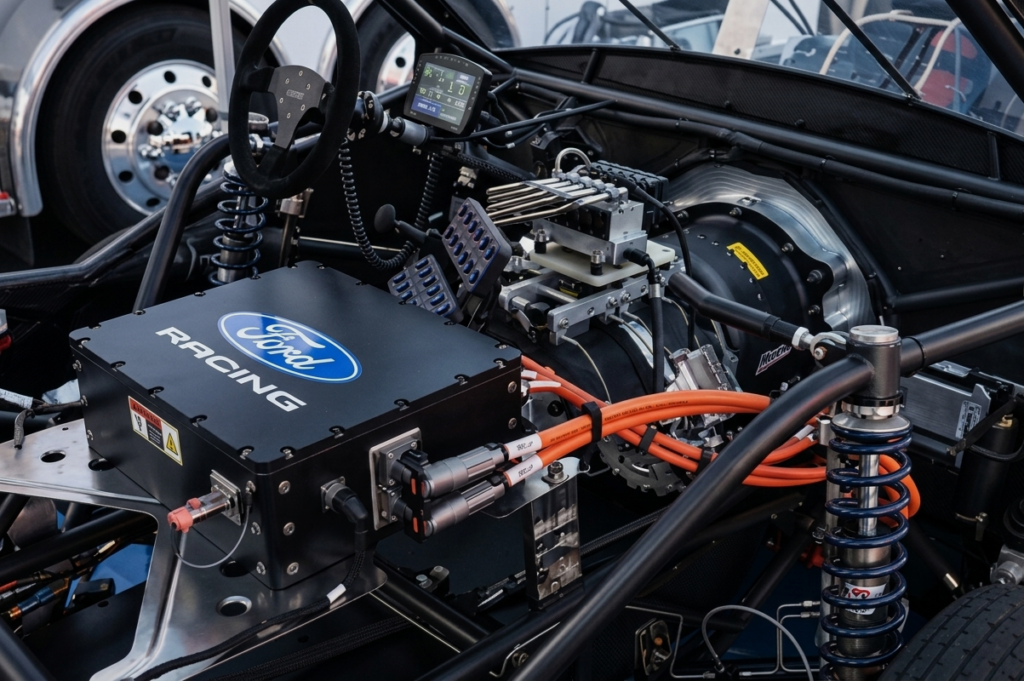
Electricity for these runs comes from a 32 kWh battery. It is smaller than the battery in a conventional electric SUV, but it is meant for speed, not long road journeys. The battery is also quite versatile. The crew can transfer portions of the battery to the front or the back of the car. This helps them balance the weight exactly, depending on how much grip the track has that day. When the battery goes low, it just takes 20 minutes to charge – great for racing, as the referees normally give teams 45 minutes between rounds to get ready.
The route to this 6-second run has been a long one for Ford. Back in 2021, their first electric racing Mustang, the Cobra Jet 1400, ran the quarter-mile in 8.128 seconds. Since then, the team has constantly lowered that amount. They advanced from 8 seconds to 7 seconds, and now they have finally broken into the 6-second area – an astonishing pace for any racing program, especially one using relatively new technology like high-performance electric motors.
Safety was also a key feature of the design. High-voltage electricity might be deadly in a crash, therefore Ford incorporated a specific safety switch. It uses a tiny explosive charge to rapidly stop all electricity to the car if something goes wrong. This “pyrotechnic” breaker ensures that the driver and the rescue teams stay safe.
Even though most people would never drive a car with 2,200 horsepower, the work Ford is doing important for normal drivers. The company is now working on making electric automobiles that cost less than €34,000. The skills they learn about making batteries more efficient and motors lighter on the race track will eventually make their way into the automobiles we use for school runs and shopping trips.