


Introducing BYD Atto 2 DM-i
BYD Atto 2 has so far been available exclusively as a fully electric B-segment crossover. However, the Chinese automaker has now expanded the range by introducing its advanced DM-i plug-in hybrid (PHEV) technology, making the Atto 2 one of the very few ultra-compact SUVs in its class to offer a plug-in hybrid powertrain.
This latest addition raises an important question: does the new PHEV variant make the Atto 2 a stronger contender than its rivals? More importantly, should buyers opt for the new hybrid version, or does the fully electric model remain the better choice? In this review, we take a closer look at both options to find out which Atto 2 deserves a place on your shortlist.
Test Vehicle Details
| Pricing | £26,995 (£29,995 for the Boost trim tested here) |
| Powertrain | 1.5-litre four-cylinder petrol engine paired with a 145kW electric motor |
| Battery Capacity | 18kWh Blade lithium iron phosphate (LFP) battery |
| Transmission | e-CVT automatic |
| Power Output | 212hp |
| Max Torque | 300Nm |
| 0–62 mph | 2.5 Seconds |
| Top Speed | 112mph |
| Range (WLTP) | Up to 395 miles |
| Emissions | 13g/km |
| Electric-Only Range | Up to 55 miles |
| Towing Capacity | 425 litres (rear seats up), 1,335 litres (rear seats folded) |
| Kerb Weight | 1,620kg |

Styling
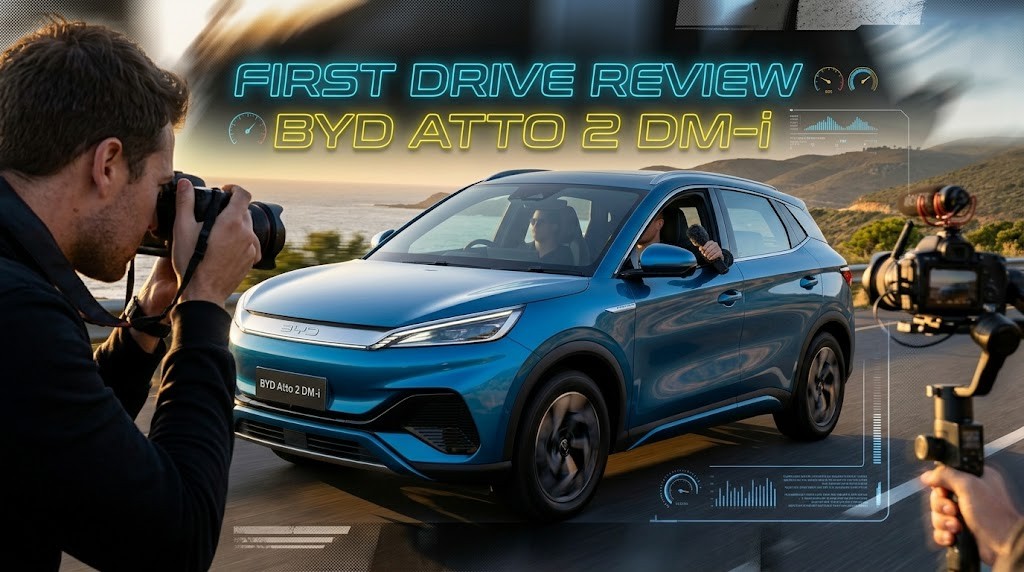
Visually, the Atto 2 DM-i shares almost everything with its all-electric sibling, making it difficult to tell the two apart at first glance. The most obvious giveaway is the ‘DM-i’ badge on the tailgate, denoting BYD’s “Dual Mode Intelligent” plug-in hybrid technology. The other clue is the presence of two separate flaps: a fuel filler on the left rear quarter panel and a charging port positioned on the front right fender.
Beyond these details, the Atto 2 DM-i retains the same clean and understated design language seen across BYD’s growing model range. While the styling is modern and inoffensive, it lacks the visual flair needed to truly stand out in the increasingly competitive compact SUV segment. Buyers are also limited to just four exterior paint options — Blue, White, Grey and Black — which doesn’t leave much room for personalization.
That said, the crossover-inspired design elements do add a degree of rugged appeal. Protective skid plates, roof rails and pronounced side sills give the Atto 2 DM-i a purposeful stance, helping it look more adventurous than its urban-focused dimensions might suggest. Entry-level Active models ride on 16-inch alloy wheels, while the higher-spec Boost trim tested here benefits from larger 17-inch alloys that fill the wheel arches more convincingly and enhance the vehicle’s overall presence.
The differences between the Active and Boost trims extend well beyond wheel size, however, with several important equipment upgrades separating the two variants — details we’ll explore later in the review.
Interior
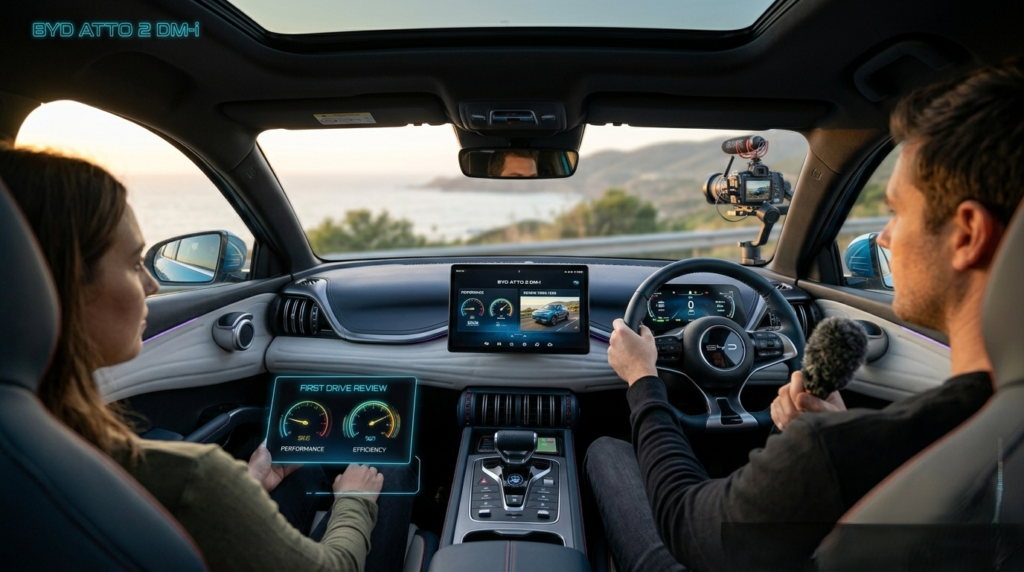
Since the launch of the all-electric Atto 2, BYD has upgraded its infotainment offering by integrating Google Built-In technology, and the same system now comes standard across the Atto 2 DM-i range. Every model is equipped with a 12.8-inch central touchscreen, an 8.8-inch digital instrument cluster, and seamless Apple CarPlay and Android Auto connectivity. However, buyers looking for premium touches such as the 50W wireless smartphone charging pad will need to step up to the higher-spec Boost trim.
In everyday use, the infotainment system is generally responsive and user-friendly, comparing favourably with many rivals in the segment. That said, it isn’t completely free of quirks. Several advanced driver-assistance functions are scattered across different menu layers, making it less intuitive than it should be when adjusting or disabling certain systems. Drivers may need some time to familiarize themselves with the interface before navigating these settings efficiently.
The 8.8-inch digital instrument display is another area that could benefit from refinement. While it provides plenty of information, the layout feels overly busy, with numerous data fields squeezed into a relatively compact screen. As a result, key information can be difficult to read quickly while driving. Even some basic functions, such as changing the indicator sound, require a trip through the touchscreen menus rather than a simple physical control.
Beyond the technology, the cabin itself is a pleasant place to spend time. Material quality is respectable for a vehicle positioned at the more affordable end of the market, with solid fit and finish throughout. However, unlike some of BYD’s more distinctive models, the Atto 2 DM-i adopts a far more conservative interior design. There’s little of the playful character found in larger models such as the Atto 3, with the dashboard favouring a clean, minimalist layout. The downside to this approach is the near-total absence of physical buttons, meaning occupants must rely on the central touchscreen for the majority of in-car functions.
Realisticness
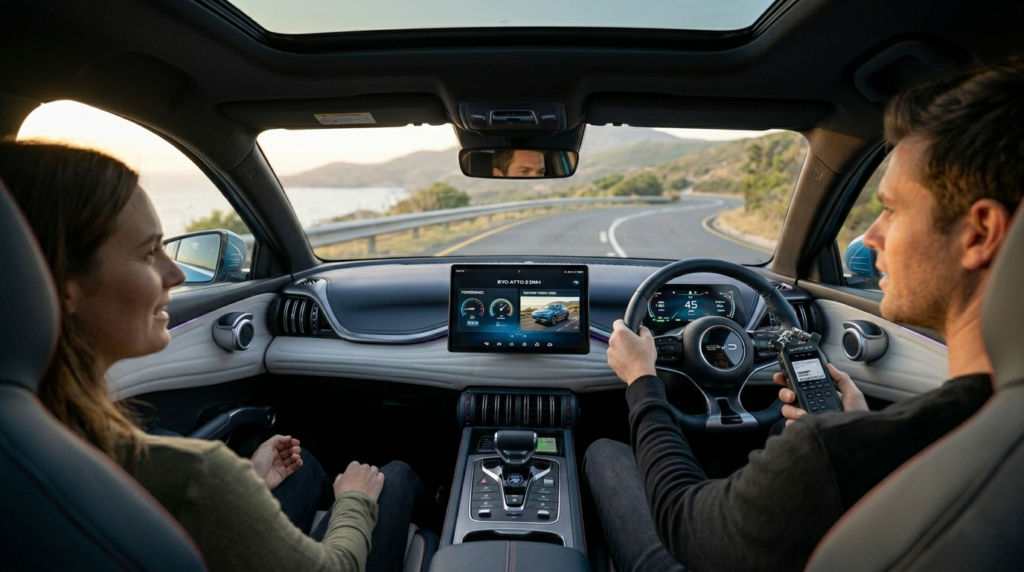
Practicality is one of the Atto 2 DM-i’s strongest attributes. Thanks to its nearly 1.7-metre-tall body and a completely flat rear floor, the compact SUV offers an impressive amount of passenger space for its segment. While accommodating three adults across the rear bench may be a squeeze on longer journeys, two adults can travel comfortably, and families with three children will find the rear seating area more than adequate.
Rear headroom is particularly generous, even in Boost models equipped with the panoramic glass roof. Legroom is acceptable for the class, although taller passengers may wish for a little extra knee room. Family-friendly credentials are further enhanced by the inclusion of three Isofix mounting points as standard — two on the rear seats and one on the front passenger seat — making child-seat installation both easy and flexible.
Cargo capacity is equally competitive. The boot offers 425 litres of luggage space with all seats in place, expanding to 1,335 litres when the 60:40 split-folding rear seats are folded flat. While the load area lacks some of the clever storage solutions, hooks and underfloor compartments found in certain rivals, it remains spacious enough for everyday family duties, shopping trips and weekend getaways.
Performance
Like other models in BYD’s growing DM-i plug-in hybrid lineup, the Atto 2 offers different battery and performance levels depending on trim. Buyers choosing the higher-spec Boost variant benefit from a larger battery pack, faster charging capabilities and a more powerful drivetrain than the entry-level Active model.
Both versions share the same 1.5-litre naturally aspirated four-cylinder petrol engine, designed primarily to operate as part of the hybrid system rather than as the main source of propulsion. Producing 98hp and 122Nm, the petrol unit is modest on its own, with the electric motor doing most of the heavy lifting. In fact, the motor generates 197hp and 300Nm, comfortably exceeding the engine’s output figures.
System torque remains identical at 300Nm across the range, but power output differs significantly. The Active model produces a combined 165hp, while the Boost raises that figure to 212hp, bringing it in line with several other BYD DM-i products currently on sale.
The biggest distinction between the two variants lies in battery capacity. The Active is equipped with a 7.8kWh Blade LFP battery that provides up to 24 miles of electric-only driving. The Boost, meanwhile, upgrades to a much larger 18kWh battery, extending the claimed EV range to 55 miles. This not only allows for more zero-emission commuting but also contributes to a longer overall driving range, with the Boost capable of covering up to 621 miles between refuelling and charging stops.
Charging performance also favours the Boost, which supports AC charging speeds of up to 6.6kW compared to the Active’s 3.3kW capability. Surprisingly, however, neither version supports DC fast charging — an omission that may disappoint some buyers given that other BYD plug-in hybrids offer this feature. As a result, a battery recharge from 15 to 100 percent takes around three hours in the Boost and slightly less in the smaller-battery Active.
On the road, the Atto 2 DM-i delivers a driving experience focused more on efficiency than outright performance. The hybrid system works smoothly during everyday driving, providing strong low-speed response and effortless urban usability thanks to its 300Nm of torque. However, under hard acceleration the powertrain can feel less refined, with noticeable delays as the petrol engine and electric motor combine their outputs. At these moments, the engine becomes vocal and the transmission tends to hold high revs, reducing overall refinement.
Although BYD claims a 0-62mph sprint of 7.5 seconds for the Boost, real-world performance feels less urgent than the figures suggest. Nevertheless, the available torque ensures the compact SUV never feels underpowered in normal driving conditions.
Efficiency remains one of the Atto 2 DM-i’s strongest selling points. During our test drive, the Boost returned an average fuel economy figure of 51.4mpg over a mixed 40-mile route. While the battery started the journey with a healthy charge, the result still highlights the impressive efficiency potential of BYD’s latest plug-in hybrid system.
Ride & Handling
The Atto 2 DM-i’s chassis is best described as competent rather than exciting. Much like its hybrid powertrain, it performs its intended role effectively, but it offers little in the way of driver engagement or dynamic flair.
Ride quality presents a mixed picture. Around town, the suspension can feel firmer than expected for a family-focused crossover, transmitting sharp impacts and road imperfections into the cabin more noticeably than some rivals. This slightly unsettles the otherwise refined character of the vehicle, particularly on poorly maintained urban roads where bumps and potholes generate a degree of harshness that feels unnecessary.
At higher speeds, however, the Atto 2 settles down considerably. While tyre and wind noise become more apparent on motorways, the suspension delivers a composed and comfortable ride on smoother surfaces. Long-distance cruising is therefore a relatively relaxed experience, with the crossover displaying the sort of refinement buyers in this segment are likely to appreciate.
When it comes to handling, the BYD prioritises predictability and security over entertainment. Steering weight is well judged, brake response is easy to modulate and body control remains impressively disciplined through corners. Yet there is little feedback or involvement for enthusiastic drivers, with the vehicle always encouraging a calm and measured driving style rather than spirited progress.
Ultimately, the Atto 2 DM-i is designed as a practical and comfortable everyday commuter rather than a driver-focused SUV. For most buyers, that approach will be perfectly acceptable, delivering confidence and ease of use in daily driving. Those seeking a more engaging or rewarding driving experience, however, may find the BYD’s conservative dynamics somewhat uninspiring.
Value
One of the Atto 2 DM-i’s biggest strengths is its value proposition. With prices starting at £26,990 for the Active and rising to £29,990 for the Boost, BYD has positioned its compact plug-in hybrid SUV among the most affordable PHEVs currently available on the market.
The £3,000 premium for the Boost trim appears particularly easy to justify, given the significant upgrades it brings. Buyers not only gain additional power, but also benefit from a larger battery pack, a longer electric-only driving range and faster charging capability. As a result, the higher-spec model is likely to be the pick of the range for most customers.
Even so, the entry-level Active trim is far from basic. Standard equipment includes a 12.8-inch touchscreen infotainment system with Google Built-In integration, an 8.8-inch digital instrument cluster, Apple CarPlay and Android Auto connectivity, adaptive cruise control, a reversing camera, rear parking sensors, LED headlights, keyless entry and start, 16-inch alloy wheels and metallic paint at no extra cost. A six-speaker audio system and a comprehensive suite of driver-assistance technologies further strengthen its value credentials.
Opting for the Boost trim adds an even more impressive equipment list. Key upgrades include larger 17-inch alloy wheels, vegan leather upholstery, a panoramic glass roof, vehicle-to-load (V2L) functionality, a 360-degree camera system, front parking sensors, a 50W wireless smartphone charger and rear privacy glass. These additions enhance both convenience and perceived quality, making the Boost feel like the more complete package.
Given the level of standard equipment available across the range, the Atto 2 DM-i offers strong value for money and compares favourably with many established rivals in the plug-in hybrid SUV segment.
Verdict
While the Atto 2 DM-i is far from flawless, it still delivers on one of BYD’s core strengths: exceptional value for money. The combination of generous standard equipment, strong interior space and an efficient plug-in hybrid system makes it a compelling proposition in financial terms, especially when compared with rivals that often offer less sophisticated drivetrains at similar prices.
However, it is held back by a few key weaknesses. The driving experience is ultimately unremarkable, and the firm low-speed ride can feel at odds with its family-focused positioning, particularly given the relatively tall profile and comfort-oriented brief. Push the car harder, and refinement also begins to suffer, with the powertrain and chassis struggling to deliver the polish expected in this segment.
As long as buyers prioritise efficiency, practicality and equipment over driving enjoyment, the Atto 2 DM-i makes a strong case for itself. That said, for those who can live without the added complexity of a plug-in hybrid, the fully electric Atto 2 arguably remains the more cohesive and refined overall package in BYD’s line-up.