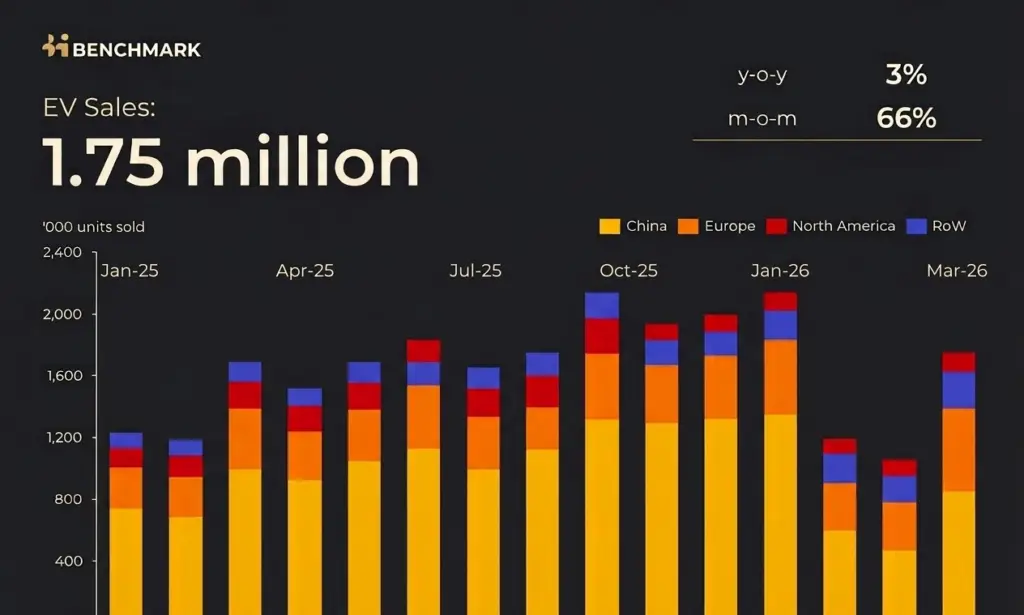
The electric vehicle industry is starting to feel like a bit of a roller coaster. New data from Benchmark Mineral Intelligence shows that March 2026 was an incredibly hectic month, with global EV sales hitting 1.75 million units in just 31 days.
That is a massive 66% surge compared to February, showing a huge burst of momentum as the spring began. However, the bigger picture is a bit more complicated. When you look at the entire first quarter (January through March), total sales reached about 4 million cars.
Despite that huge spike in March, the total for Q1 2026 is actually 3% lower than it was during the same period last year. It seems that while the month of March was a sprint, the overall start to the year has been a bit of a marathon for manufacturers.
Europe is absolutely stealing the spotlight right now. For the first time in history, European drivers purchased over 500,000 electric vehicles (EVs) in a single month. This surge pushed March sales up by 37% compared to the same period last year.
Looking at the first quarter (January to March), European sales hit 1.2 million units, marking a 27% increase. It’s becoming clear: when gas prices spike and the government chips in to help with the bill, people quickly realize that "plugging in" is a pretty smart move.
source: Benchmark Mineral Intelligence
France serves as a prime example of this “panic” in action. As gas prices skyrocketed, a wave of anxiety swept through the country, with many fearing that fuel might disappear from stations entirely. This uncertainty triggered a massive shift in consumer behavior, resulting in a 69% surge in electric vehicle sales this past March.
The United Kingdom also saw a record-breaking month. Driven by the annual tradition of March license plate changes, sales climbed by 31% compared to the previous year. This growth wasn’t isolated; both Italy and Spain reported similar upward trends. Ultimately, it seems that soaring gas prices are becoming the most effective marketing tool the battery industry has ever had.
The Chinese market is currently navigating a period of recalibration as it seeks a new equilibrium. Following the typical lull of the Lunar New Year holiday, March witnessed a significant rebound, with sales nearly doubling compared to February as consumers returned to their normal routines and shopping habits.
Despite this monthly surge, the broader picture for the first quarter shows some underlying challenges. Although China maintains its status as the global leader—accounting for nearly half of all worldwide sales—total volume for the first three months reached 1.9 million units, marking a 21% decline compared to the same period last year. This dip suggests a shift in the landscape, likely driven by recent adjustments to government regulations and a more cautious approach from local buyers amid economic shifts.
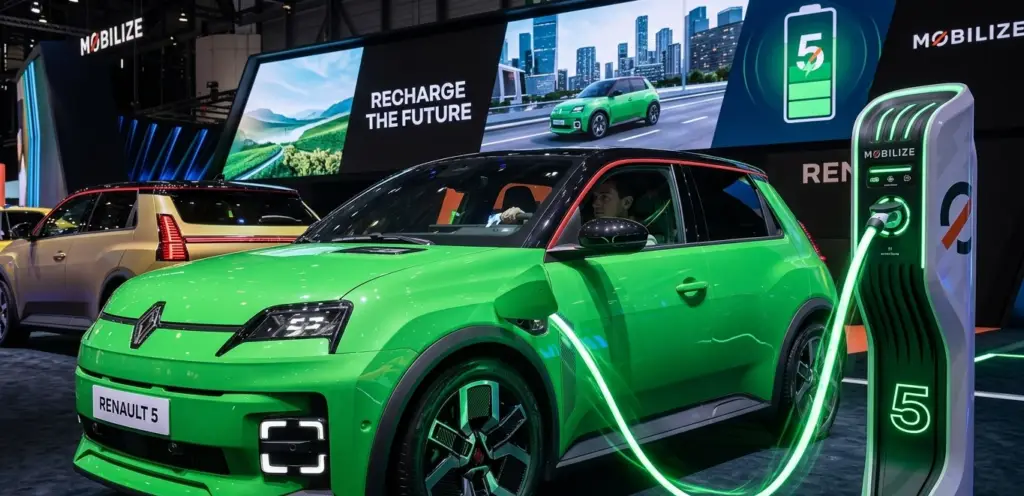
The Surge of Chinese EVs in Europe
As domestic demand in China begins to cool, Chinese automakers have shifted their focus toward global expansion. This massive export push has been so rapid that it has actually outpaced local demand in some regions, leading to the unusual sight of thousands of electric vehicles (EVs) sitting in overseas parking lots, waiting for buyers.
Spotlight on Italy
Nowhere is this trend more visible than in Italy, where Chinese brands are making significant inroads:
Leapmotor’s Dominance: This brand alone captured nearly 30% of the Italian battery-electric vehicle (BEV) market in the first quarter of the year.
Total Market Share: When you factor in other Chinese manufacturers, their combined share of the Italian EV market climbs to almost 40%.
The Takeaway: The combination of aggressive pricing and high production volume is rapidly reshaping the European automotive landscape, turning Italy into a primary stronghold for Chinese EV adoption.
North America is where the story takes a bit of a somber turn. In the United States and Canada, sales plummeted by 27% during the first quarter, with only 320,000 EVs moving off the lots across the entire continent.
There was a small glimmer of hope in March when the US market managed to clear over 100,000 units—its strongest performance in months—but it still feels like an uphill climb compared to the highs of 2025. It seems that once the government pulled the plug on those tax credits at the end of last year, a lot of people took one look at the price tag and decided their old gas guzzlers were doing just fine.
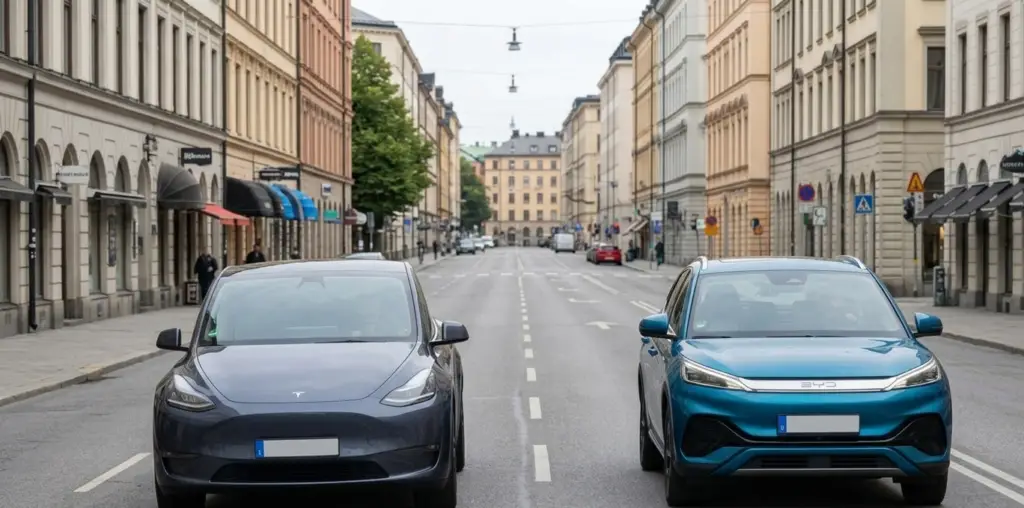
Honda officially pulled the plug on the 0 Series (the Saloon and the SUV) for the North American market. It’s a huge blow because these were supposed to be their “clean slate” cars—built on an entirely new platform with that futuristic, wedge-shaped design they showed off at CES.
The Reason: Honda admitted they underestimated how much the market would shift. With federal tax credits expiring and a sudden cooling of consumer demand for pure EVs, they realized they couldn’t make these cars profitable.
The Damage: They’re looking at a massive financial hit—up to ¥2.5 trillion (around $15.7 billion) in write-downs and losses.
- While the major markets are riding a bit of a rollercoaster lately, the rest of the world is absolutely hitting the gas on electric vehicles.
- Take New Zealand, for example—registrations for new EVs skyrocketed by a staggering 263% this March. Australia isn’t trailing far behind either; they just celebrated a record-breaking month with sales jumping 89% compared to last year.
- Overall, these emerging markets moved about 600,000 units over the quarter, marking a solid 79% increase. It seems the motivation is the same down under as it is in Europe: with gas prices stinging at the pump, more and more people are deciding it’s finally time to trade the fuel nozzle for a plug.