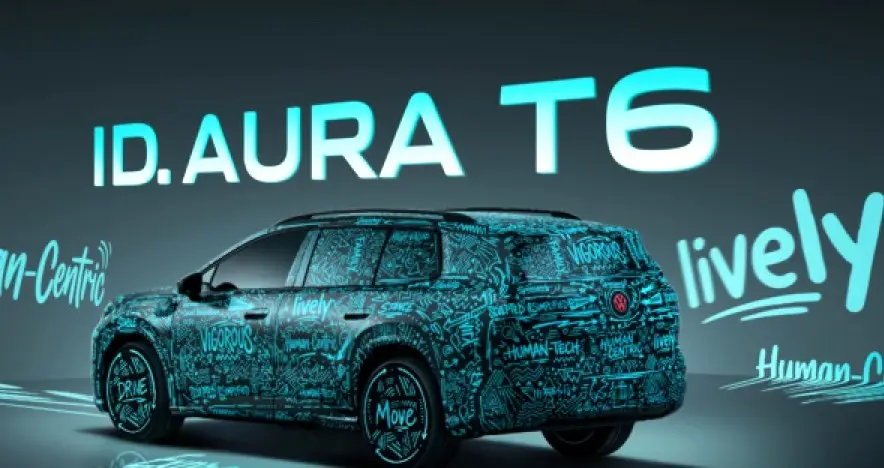
Volkswagen has officially unveiled the ID. Aura T6, a purpose-built electric vehicle (EV) designed exclusively for the Chinese consumer. Developed through the FAW-Volkswagen joint venture, the model represents a significant evolution in the company's regional strategy, moving away from a "one-size-fits-all" global architecture to a more localized, tech-driven approach.
The ID. Aura T6 is the first tangible result of Volkswagen's technical partnership with the Chinese EV manufacturer XPeng. This shift is a direct response to the intensifying competition in China’s automotive sector, where local software and smart-driving capabilities often outpace traditional Western offerings.
source: FAW-Volkswagen
The Volkswagen ID. Aura T6 is more than just a new model; it represents a fundamental shift in the brand’s approach to electric mobility, particularly for the Chinese market. Developed as a flagship for the new FAW-Volkswagen joint venture, the vehicle’s name serves as a strategic roadmap for the company’s future.
AURA (The Acronym): Rather than just a word, AURA stands for the four pillars of Volkswagen’s new EV philosophy: Advanced, User-centric, Reliable, and All-access. This is a direct response to the tech-heavy competition from brands like NIO and BYD, signaling a move toward feature-rich, accessible technology.
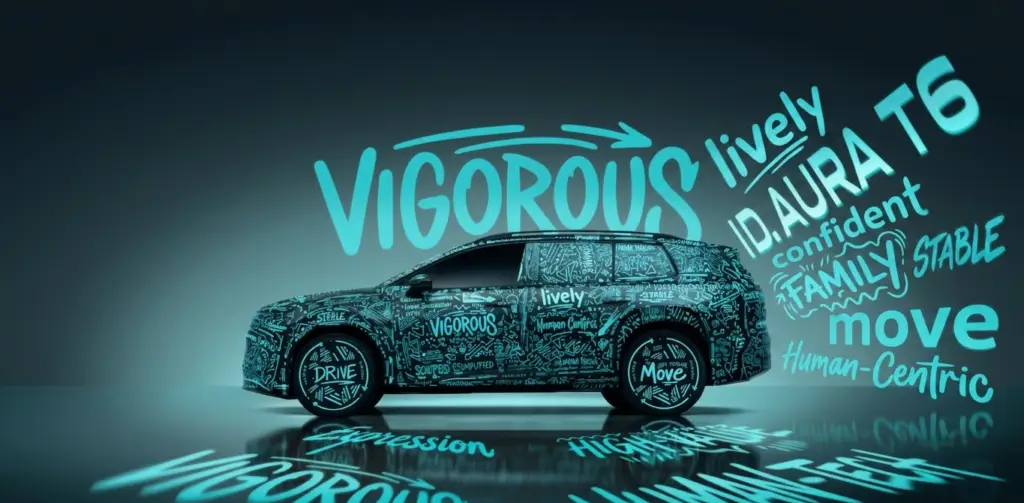
The ID. Aura T6 challenges conventional automotive silhouettes, opting for a sleek, aerodynamic profile that blurs the lines between a rugged SUV and a functional minivan. By moving away from a traditional boxy frame, the T6 features a remarkably short hood and an aggressive, swept-back windshield. This cab-forward approach isn’t just a stylistic choice; it significantly minimizes drag, allowing the vehicle to slice through the air with ease—a critical factor in maximizing its electric range and efficiency.
Aerodynamic Efficiency: The fluid, low-drag shape is engineered specifically to reduce wind resistance.
Hybrid Silhouette: A “one-box” design philosophy that maximizes interior volume while maintaining a modern, crossover aesthetic.
Optimized Visibility: The expansive, reclined windshield offers a panoramic view of the road, enhancing the driver’s spatial awareness.
Increased Range: Every curve is intentional, serving the dual purpose of futuristic looks and energy conservation.
source: FAW-Volkswagen
The new Volkswagen ID.7 Tourer (or similarly sized ID. models) makes a bold statement with its substantial footprint. Measuring approximately 5 meters in length, it sits perfectly balanced in the lineup, bridging the gap between the sleek ID. Era 9X and the robust ID. Unyx 08.
This generous exterior translates directly to a cavernous interior, providing ample room for a three-row configuration. By opting for a 2+2+2 layout, Volkswagen has prioritized individual comfort; this “captain’s chair” approach offers passengers more shoulder room and easier access to the rear compared to traditional bench seating. It’s a thoughtful design choice that transforms the cabin into a premium, family-oriented lounge.
The ID. Aura T6 marks a significant shift in automotive engineering, debuting the China Electrical Architecture (CEA). Developed through a strategic partnership between Volkswagen and XPeng, this system moves away from the fragmented setups of the past toward a streamlined, future-proof digital foundation.
source: FAW-Volkswagen
Safety and intelligent driving are the cornerstones of the new ID. Aura T6. This mid-size electric crossover marks a historic milestone as the first Volkswagen model to feature a roof-mounted LiDAR sensor. This advanced “laser eye” provides the vehicle with a precise, 360-degree view of its surroundings, significantly enhancing its ability to detect obstacles in complex environments.
The T6 is powered by the China Electronic Architecture (CEA), a cutting-edge platform co-developed with XPeng that reduces electronic control units by 30% for faster data processing. Complementing this hardware is the intelligent driving system from Carizon—a specialized joint venture between Volkswagen’s software arm, CARIAD, and Horizon Robotics. Tuned specifically for challenging urban navigation, this system leverages localized AI to deliver a safer, more intuitive autonomous driving experience.
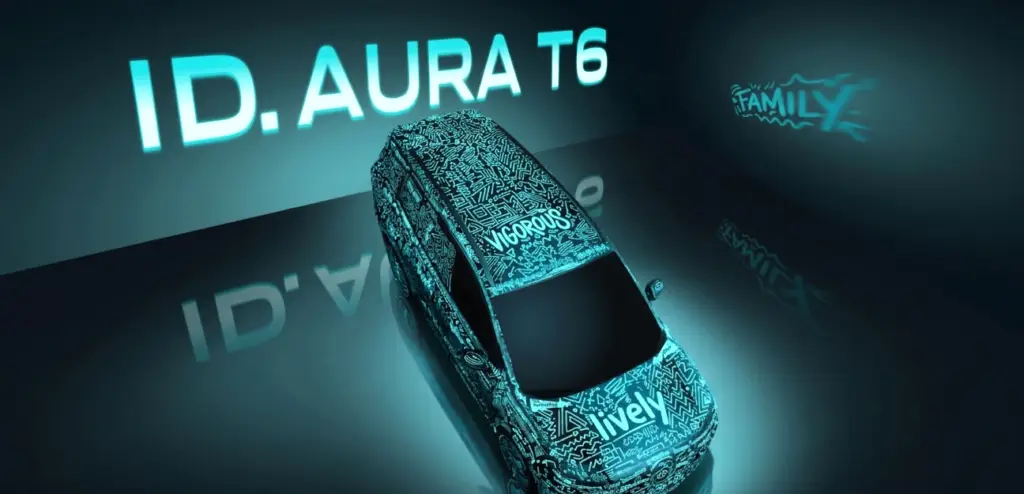
Volkswagen took a playful approach during the recent reveal, wrapping its test vehicles in camouflage emblazoned with the slogan “German engineering + local innovation.” This subtle jab at themselves signals a strategic shift, acknowledging that staying competitive in the Chinese market requires deep collaboration with local tech experts.